
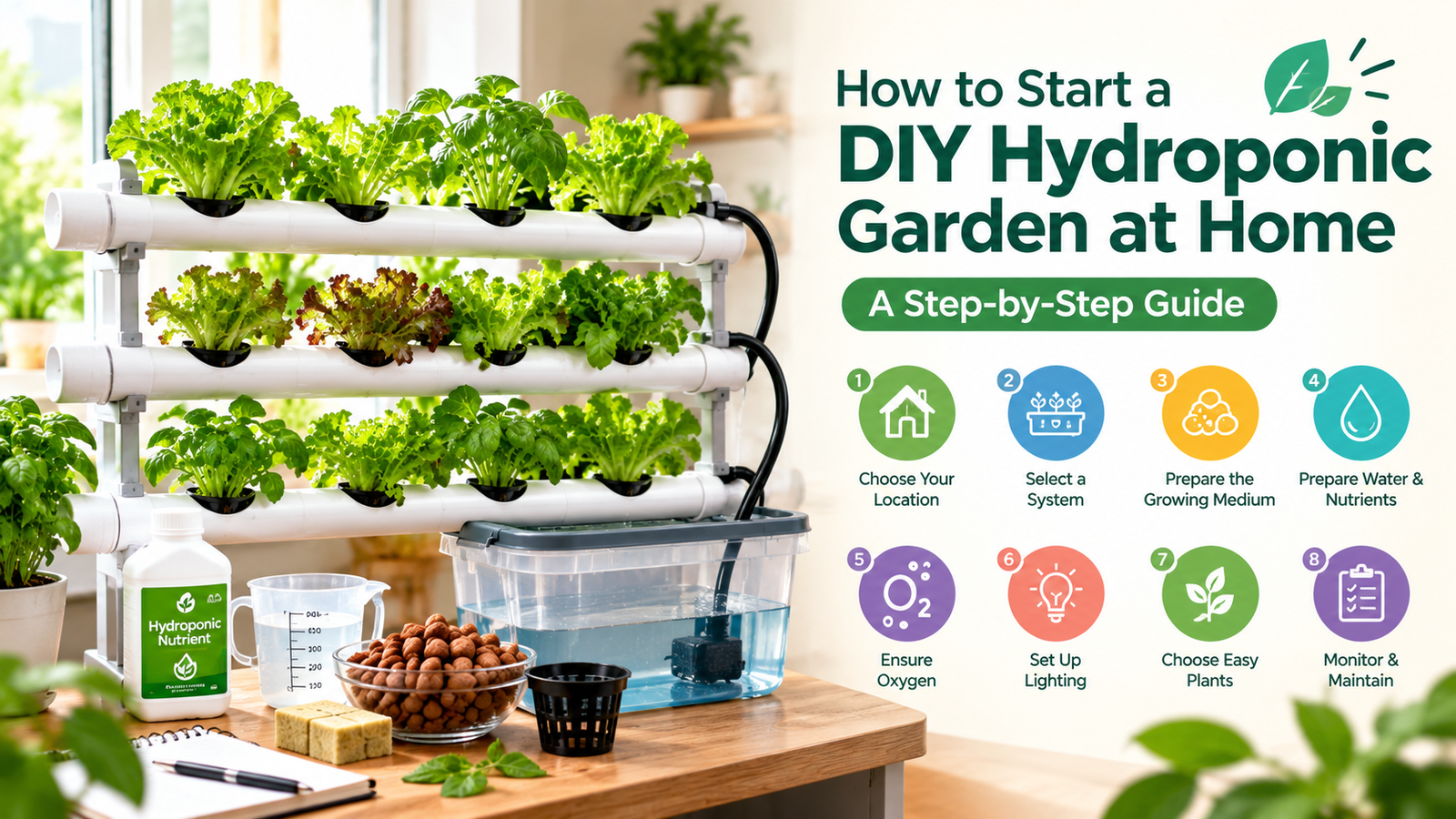
Starting a DIY hydroponic garden can feel intimidating when you first see all the equipment involved. Pumps, reservoirs, nutrients, lights, growing media—there seems to be a lot to learn.
The good news is that you don’t need to start with a complicated system.
A small and simple hydroponic garden can help you understand how plants grow without soil and teach you the essential principles of water, nutrients, light, and oxygen.
This step-by-step guide will help you understand how to start your first DIY hydroponic garden at home.
Step 1: Choose the Right Location
Before building your system, decide where your hydroponic garden will be located.
Possible locations include:
- A kitchen
- A balcony
- A spare room
- A garage
- A greenhouse
- An indoor growing area
What Should You Consider?
Your location should provide enough space for your system and allow you to manage lighting and environmental conditions.
Indoor gardens may require artificial lighting if natural sunlight is not sufficient.
Step 2: Choose a Beginner-Friendly Hydroponic System
Your first system should be simple.
A complicated setup can make it difficult to understand what is causing problems when something goes wrong.
Start With a Wick System
A wick system is a useful beginner option because it can operate without complicated mechanical equipment.
It generally includes:
- A reservoir
- A growing tray
- Growing medium
- Wicks
The wick carries water and nutrients from the reservoir to the plant roots.
Step 3: Choose Your Growing Medium
Hydroponic plants often need support around their roots.
The growing medium helps hold the plant in place while allowing water and air to reach the root area.
Common Growing Media
You may use materials such as:
- Expanded clay pellets
- Perlite
- Vermiculite
- Rock wool
- Gravel
Choose a medium appropriate for your hydroponic system and plants.
Step 4: Prepare Your Water Reservoir
The reservoir stores the nutrient solution that feeds your plants.
Depending on your system, the reservoir may be a simple container or part of a larger circulating setup.
Keep the Reservoir Clean
Cleanliness is important in hydroponic gardening.
Algae and other problems can develop when systems are not properly maintained.
Regular cleaning helps protect the growing environment.
Step 5: Add a Suitable Nutrient Solution
Plants require more than water.
They need essential nutrients for healthy growth.
Hydroponic nutrient solutions provide the minerals that plants would normally obtain through the growing environment.
Important Plant Nutrients
Plants need nutrients that can include:
- Nitrogen
- Phosphorus
- Potassium
- Calcium
- Magnesium
They also require other important trace elements.
Why Nutrient Management Matters
Too little or too much nutrition can affect plant health.
Follow appropriate instructions for the nutrient products you use and monitor your plants carefully.
Step 6: Make Sure the Roots Receive Oxygen
Roots need oxygen.
In some hydroponic systems, an air pump and air stone are used to create bubbles in the nutrient solution.
What Does an Air Stone Do?
The air stone helps distribute air through the water.
This can improve oxygen availability around the roots.
Aeration is particularly important in systems where roots remain close to water for long periods.
Step 7: Choose the Right Lighting
Light is essential for plant growth.
Plants use light to support photosynthesis.
Natural Light or Artificial Light?
If your garden receives suitable natural light, you may be able to use it.
For indoor growing areas with limited sunlight, artificial grow lights may be necessary.
The lighting requirements depend on the plants you are growing.
Step 8: Start With Easy Plants
Your first hydroponic garden should focus on plants that are manageable.
Leafy greens and herbs are useful options for learning the basics of hydroponic growing.
Why Start Small?
Starting with a small number of plants makes it easier to:
- Monitor water levels
- Observe plant growth
- Identify problems
- Learn from mistakes
Once you gain experience, you can expand your system.
Step 9: Monitor Your Hydroponic Garden Regularly
Hydroponic systems require attention.
You should regularly check:
- Water levels
- Plant health
- Root condition
- Equipment
- Cleanliness
- Signs of pests or disease
Watch for Problems Early
The earlier you identify a problem, the easier it can be to respond.
Pay attention to changes in plant appearance and system performance.
Step 10: Keep Learning and Improve Your System
Hydroponics is a learning process.
As you become more comfortable with your first system, you can experiment with:
- Different plants
- New growing systems
- Improved lighting
- Different growing media
- More advanced equipment
You don’t need to build the perfect system immediately.
Start simple and improve over time.
Common DIY Hydroponic Mistakes to Avoid
Starting With a System That Is Too Complicated
Choose a simple setup first.
Understanding the basics is more important than having advanced equipment.
Ignoring Plant Requirements
Different plants have different needs.
Pay attention to lighting, nutrients, water, and environmental conditions.
Neglecting System Cleaning
Hydroponic systems need regular maintenance.
Cleaning reservoirs and growing equipment can help prevent problems.
Choosing Plants That Need Too Much Too Soon
Start with manageable plants before moving to larger or more demanding crops.
Frequently Asked Questions
Can I build a hydroponic garden at home?
Yes. Hydroponic systems can be adapted for homes, apartments, balconies, and indoor spaces.
What is the easiest DIY hydroponic system?
A wick system is one of the simplest beginner systems because it has few moving parts.
Do I need a pump for hydroponics?
Not always. A basic wick system can work without a pump, while many active systems use pumps to move water and nutrients.
What should I grow first?
Herbs and leafy greens can be good starting points for beginners.
Final Thoughts
Starting a DIY hydroponic garden is easier when you focus on the basics.
Choose a simple system, provide appropriate water and nutrients, make sure your plants receive enough light and oxygen, and monitor your garden regularly.
You don’t need a large farm or complicated equipment to begin. A small hydroponic project can teach you the foundations of growing plants without soil.
Next to read: Learn what hydroponics is, discover the benefits of hydroponic gardening, and compare the different types of hydroponic systems before building your next project.