
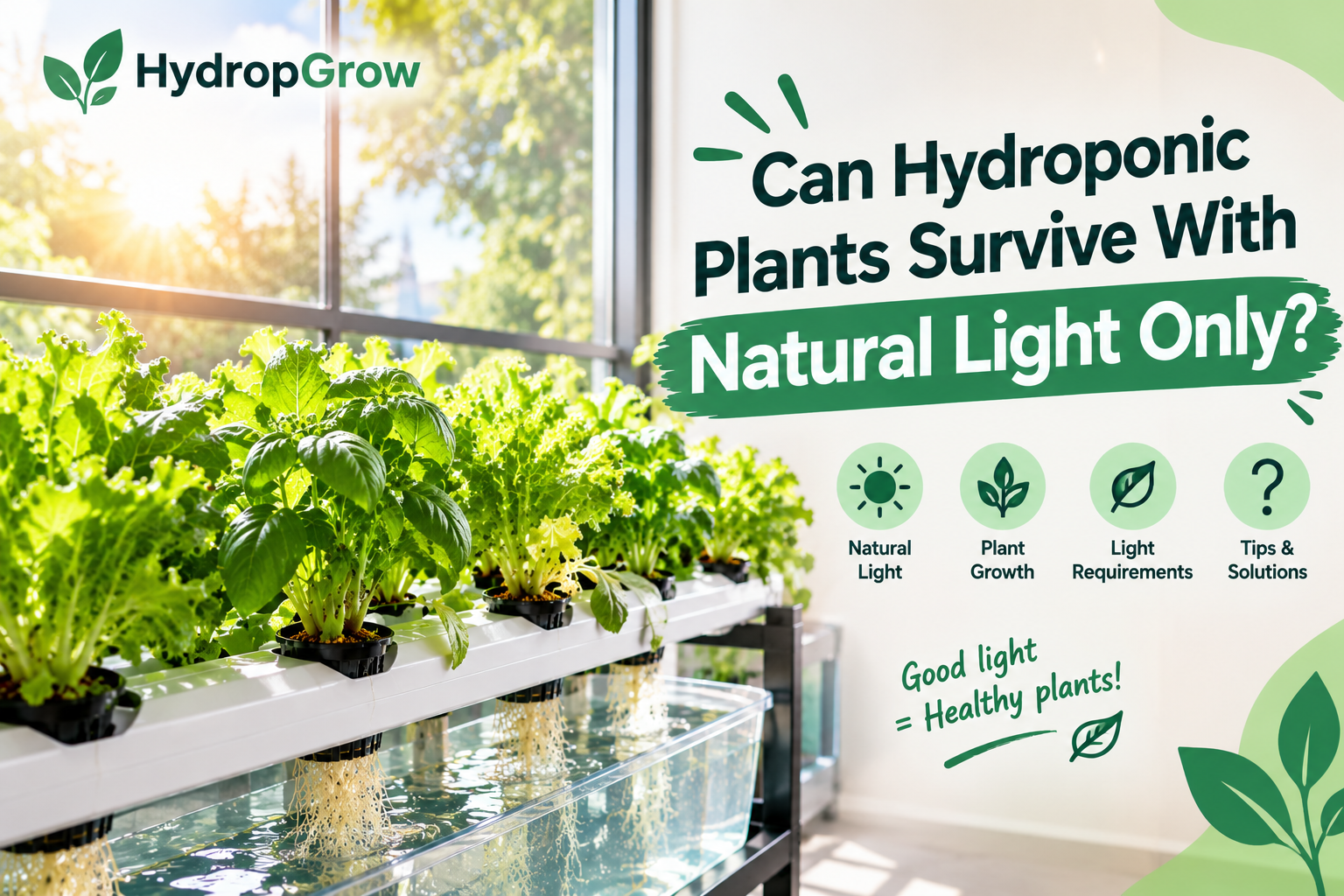
Hydroponic plants do not require artificial light simply because they are grown without soil. They require enough usable light for photosynthesis, and natural sunlight can provide that when the location is bright enough. The challenge indoors is that light through a window is often weaker and less consistent than outdoor sunlight. Crop choice, window direction, season, distance from the glass, and hours of direct or bright light all matter.
Table of Contents
- Why This Topic Matters
- What You Need Before You Start
- Understanding Hydroponic Systems
- Step-by-Step Guide
- Light, Water, Nutrients and Environment
- Common Mistakes to Avoid
- Troubleshooting
- Maintenance and Recovery
- Frequently Asked Questions
- Topic-Specific Questions
- Internal Linking Opportunities
- Final Tips
Why This Topic Matters
Using natural light can reduce equipment cost and simplify a small hydroponic setup. It can also make sense for a sunny balcony, greenhouse, or bright south-facing window. However, natural light changes throughout the year, so a location that works in summer may be inadequate during shorter winter days.
What You Need Before You Start
- A bright growing location
- A way to observe plant shape and leaf color
- A clean hydroponic system appropriate for the crop
- pH and EC testing equipment
- Airflow around the foliage
- Supplemental lighting as an optional backup
- A simple way to rotate or reposition plants when appropriate
Understanding Hydroponic Systems
Wick syste+ms
Passive systems can be paired with natural light for simple herbs and greens, provided moisture management is appropriate.
DWC
DWC works with natural light, but the container and nutrient solution should be protected from excessive light to reduce algae problems.
NFT
NFT can be used near a bright growing location, but the crop still needs enough usable light throughout its growth cycle.
Media-based systems
These are often practical for larger crops, especially where a sunny greenhouse or balcony provides strong natural light.
The best setup is the one that matches the crop, available space, expected maintenance, and the grower’s ability to monitor the system. A simpler design is often easier to troubleshoot because fewer components can fail at the same time.
Step-by-Step Guide
1. Choose the crop first
Do not start with the window and force every crop into it. Match the available light to a crop with realistic light requirements.
2. Observe the location
Watch how the light changes during the day and across seasons. A bright room is not necessarily a high-light growing environment.
3. Position the garden safely
Keep leaves close enough to receive useful light without overheating or creating unsafe conditions around the equipment.
4. Monitor plant shape
Long, thin stems and large gaps between leaves can indicate insufficient light.
5. Watch temperature
A sunny window can provide strong light but also create excessive heat, especially behind glass.
6. Add supplemental light when needed
If natural light is consistently inadequate, a suitable grow light can provide a more predictable schedule.
Light, Water, Nutrients and Environment
Natural light has two sides: intensity and duration. A window can provide a few hours of strong sunlight but leave the plant in low light for the rest of the day. Seasonal changes also matter. Cloud cover, winter day length, and building shade can reduce the usable light reaching the leaves.
Light
Light should be managed according to the crop and the growing location. Indoor growers should distinguish between a room that looks bright and a location that provides enough usable light for photosynthesis. Outdoor or window gardens also need protection from excessive heat.
Water and Oxygen
Water availability and root-zone oxygen are connected to system design. Active circulation, aeration, reservoir temperature, and the amount of exposed root surface all influence the root environment. Do not treat water quantity alone as proof that roots are healthy.
Nutrients and pH
Use a complete hydroponic nutrient program appropriate for the crop. Measure the solution rather than making repeated adjustments based only on appearance. pH and EC are useful management tools, but they should be interpreted together with plant growth and water conditions.
Common Mistakes to Avoid
- Assuming a bright-looking room equals sufficient plant light
- Growing tomatoes or cucumbers in a low-light window
- Ignoring heat from direct sun through glass
- Changing the light position every day without observing plant response
- Trying to fix weak growth by adding more nutrients
Troubleshooting
Plants become leggy
Move them to a brighter location or consider supplemental lighting.
Leaves look pale
Check light along with nutrient and root conditions; pale leaves are not caused by light alone.
Plants overheat near the window
Improve airflow and reposition the garden to balance light and temperature.
Growth is slow in winter
Seasonal light reduction may be the main factor. Compare winter conditions with the same location during brighter months.
Maintenance and Recovery
Harvest leafy herbs and greens regularly to keep plants compact and productive. Fruiting crops need more time and often benefit from stronger, more consistent lighting.
A good maintenance routine is preventive. Check the root zone, reservoir level, equipment, plant structure, and growing environment at regular intervals. Record unusual observations so you can identify patterns instead of treating every problem as a new mystery.
Frequently Asked Questions
Can lettuce grow hydroponically with natural light?
It can if the location provides enough usable light. Growth may be slower in low-light conditions.
Can tomatoes grow hydroponically without grow lights?
They can in a sufficiently sunny location, but indoor windows often do not provide the consistency and intensity required for strong fruiting growth.
How do I know if natural light is enough?
Plant shape, growth rate, leaf development, and the actual light conditions of the location are useful indicators. A room looking bright is not a reliable measurement by itself.
Should I use a grow light near a sunny window?
It can be useful when natural light is inconsistent or insufficient, especially during shorter days.
Topic-Specific Questions
Leafy greens and many herbs are practical candidates for natural-light hydroponics. Fruiting crops such as tomatoes, peppers, and cucumbers generally place greater demands on light and space, so they require a brighter growing environment.
When applying this advice to a specific crop, consider plant age, canopy size, root volume, and the crop’s preferred environmental conditions. A young herb and a mature fruiting plant can respond very differently to the same change in water, temperature, or light.
Practical Takeaway
The most reliable hydroponic routine is based on observation and measurement. Keep the system stable, learn what is normal for your crop, and investigate changes before making large corrections. This approach makes hydroponics more predictable and easier to maintain over time.
Internal Linking Opportunities
- What Happens to Hydroponic Plants When the Power Goes Out?
- Can Hydroponics Work During a Heatwave?
- Can You Run a Hydroponic Garden Without a Water Pump?
Final Tips
- Match the hydroponic method to the crop and the level of maintenance you can provide.
- Measure important variables instead of relying only on visual symptoms.
- Keep equipment clean and inspect pumps, tubing, reservoirs, and timers regularly.
- Make one controlled change at a time when troubleshooting.
- Record useful observations so future problems are easier to diagnose.