
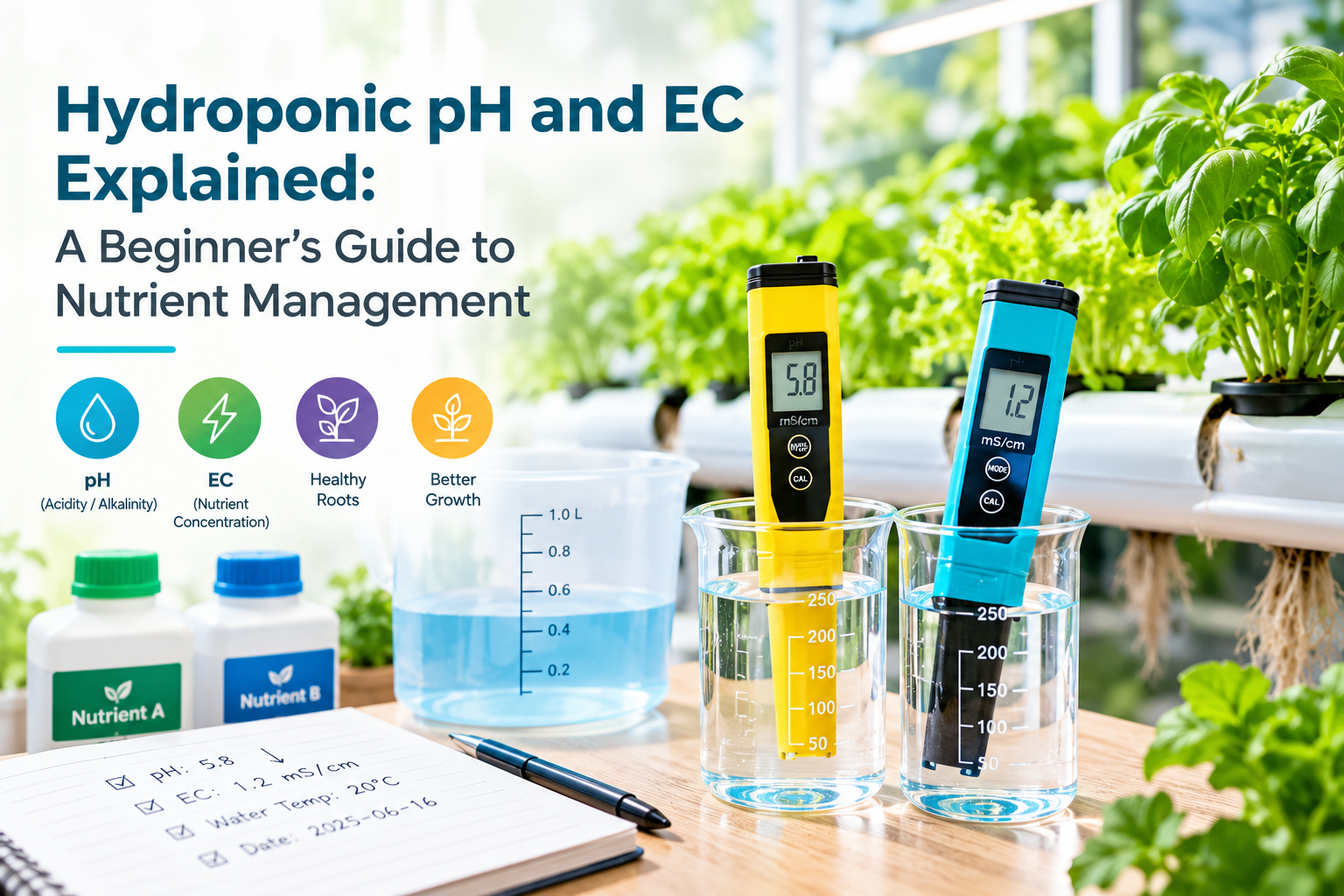
Hydroponic plants depend on a carefully managed root environment. Unlike soil, where nutrients interact with a complex growing medium, hydroponic systems place the grower in direct control of the water and nutrient solution. This is one of hydroponics’ greatest advantages, but it also means that basic measurements become important.
Two of the most useful measurements are pH and EC. pH helps indicate how acidic or alkaline the nutrient solution is, while EC provides an indication of dissolved ionic concentration. Together, they give growers a practical way to monitor the nutrient environment.
Understanding these measurements does not require advanced chemistry. With a reliable meter, proper calibration, and a consistent routine, beginners can use pH and EC to make better decisions.
What Is pH?
pH is a measure of acidity or alkalinity. In hydroponics, pH affects the availability of nutrients to plant roots. If the solution moves too far outside a suitable range, some nutrients may become less available even if they are present in the reservoir.
Most hydroponic crops are grown in a mildly acidic environment. The exact target depends on the crop and nutrient system, so it is better to follow a crop-specific recommendation rather than using one number for every plant.
The important lesson is stability. A pH that changes dramatically from day to day may indicate a problem with water quality, nutrient balance, biological activity, or plant uptake.
What Is EC?
EC stands for electrical conductivity. Because dissolved nutrients increase the solution’s ability to conduct electricity, EC can be used as a practical indicator of nutrient concentration.
EC is not a direct measurement of every individual nutrient. Two solutions with similar EC can have different nutrient compositions. For that reason, EC should be used together with the correct nutrient formula, plant observations, and manufacturer instructions.
Seedlings generally need a gentler nutrient environment than mature plants. Increasing concentration too quickly can damage young roots, while an overly weak solution may fail to support vigorous growth.
How to Measure pH Correctly
Use a quality digital pH meter and calibrate it according to the manufacturer’s instructions. Calibration frequency depends on the instrument and usage, but regular calibration is essential for trustworthy readings.
Before measuring, mix the reservoir gently so the solution is reasonably uniform. Rinse the probe with appropriate water between samples and store the electrode according to the manufacturer’s instructions.
Do not make large corrections simply because one reading looks unusual. Check the measurement again, confirm that the meter is calibrated, and then make a gradual adjustment if necessary.
How to Measure EC
EC meters are generally easier to maintain than pH meters, but they still need periodic checking and cleaning. Measure the solution after nutrients have been mixed and allowed to distribute evenly.
Compare the reading with the recommended range for your crop and growth stage. If EC rises while the reservoir volume falls, plants may be taking up proportionally more water than nutrients. If EC falls significantly, plants may be consuming nutrients faster than water.
These trends are often more informative than a single measurement.
How to Mix a Nutrient Reservoir
Start with clean water. Add nutrients according to the product instructions and mixing order. Different products can react if concentrated components are mixed directly together, so follow the manufacturer’s sequence.
After mixing, allow the solution to circulate or stir thoroughly. Then measure EC and pH. It is generally easier to adjust pH after the nutrients have been fully mixed.
Keep a written record of water volume, nutrient amounts, EC, pH, and date. Over time, this log can show how your particular plants and water source behave.
Common pH and EC Mistakes
One common mistake is chasing the pH every few minutes. Nutrient solutions can naturally shift after mixing, and plants change the solution as they absorb water and nutrients. Give the system time to stabilize before repeatedly correcting it.
Another mistake is assuming that a higher EC will automatically produce faster growth. Excessively concentrated nutrient solutions can stress roots and interfere with water uptake.
A third mistake is ignoring the water source. Tap water can contain minerals that contribute to EC and influence pH behavior. If your source water changes, your nutrient management may change as well.
When Should You Change the Reservoir?
The answer depends on the system, crop, reservoir size, water quality, and nutrient strategy. Some growers perform regular complete changes, while others monitor and replenish carefully.
A complete reservoir change can reset nutrient balance when the solution has become difficult to manage. Between changes, remove plant debris, keep the reservoir clean, and maintain an appropriate water level.
There is no universal schedule that works perfectly for every hydroponic garden. The best approach is to follow the nutrient manufacturer’s recommendations and use your measurements and plant observations to refine the routine.
Frequently Asked Questions
What pH is best for hydroponics? Many hydroponic crops perform well in a mildly acidic range, commonly around pH 5.5–6.5, but the ideal range varies by crop and nutrient program.
Does EC measure nutrients directly? No. EC indicates electrical conductivity and is useful as an estimate of overall dissolved ionic strength, not a complete nutrient analysis.
Why does pH keep rising? Several factors can contribute, including nutrient uptake, water chemistry, biological activity, and the composition of the nutrient solution.
Should I adjust pH before or after adding nutrients? Usually mix the nutrient solution first, then measure and adjust pH according to the product instructions.
Final Thoughts
pH and EC are not complicated once you understand what each measurement tells you. Treat them as monitoring tools rather than numbers to chase. Combine reliable measurements with good sanitation, correct nutrients, healthy roots, and careful observation, and your hydroponic system will become much more predictable.