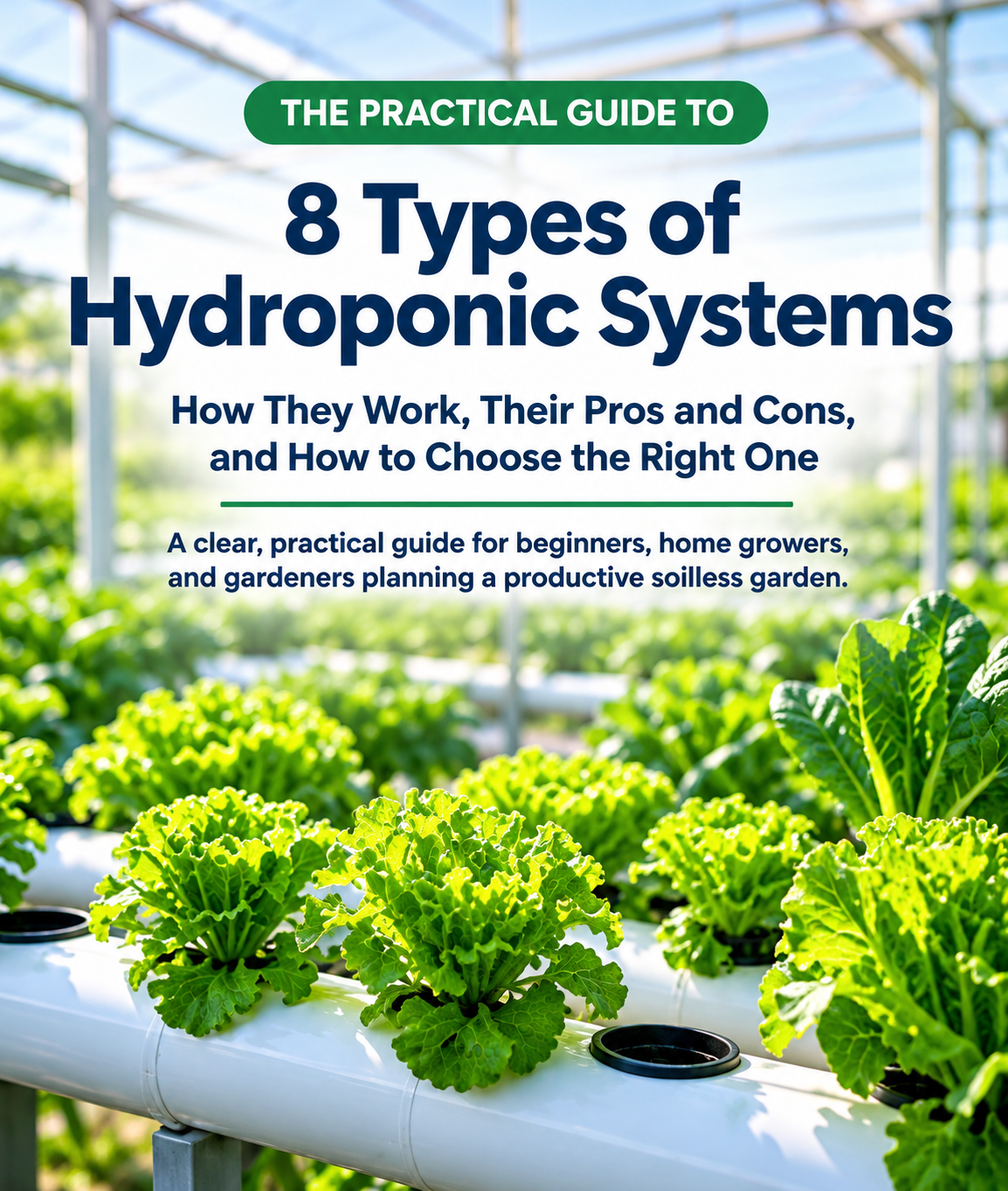
Hydroponics is a method of growing plants without traditional soil. Instead, roots receive water and essential mineral nutrients through a nutrient solution. Some systems keep the roots directly in water, while others use an inert growing medium—such as coco coir, perlite, clay pebbles, or rockwool—to support the plant and manage moisture.
By controlling water delivery and nutrition, growers can create a more predictable root environment than they might achieve in an unmanaged soil bed. Hydroponics is used in home gardens, greenhouses, research facilities, and commercial farms. It can also make growing possible in places where suitable soil is limited, although light, temperature, clean water, and regular maintenance remain essential.
Table of Contents
- Deep Water Culture (DWC)
- Nutrient Film Technique (NFT)
- Ebb and Flow (Flood and Drain)
- Drip Hydroponic System
- Aeroponics System
- Kratky Method
- Wick System
- Vertical Hydroponic Systems
- Comparing the 8 Types of Hydroponic Systems
- How to Choose the Best Hydroponic System
- Frequently Asked Questions (FAQs)
- Final Thoughts
Why Do People Choose Hydroponics?
- ficient water use: recirculating systems can reuse nutrient solution, although plants still use water and some is lost through evaporation and transpiration.
- Flexible layouts: systems can fit a windowsill, a spare room, a greenhouse bench, or a vertical growing area.
- More control over nutrition: growers can monitor pH and electrical conductivity (EC) and adjust nutrient strength to suit the crop.
- Less soil-related mess: hydroponics avoids transporting garden soil indoors, though algae, pests, and root diseases can still occur.
- Consistent growing conditions: when the system is well managed, plants can receive a more consistent supply of water and nutrients.
Is Hydroponics Always Better Than Soil?
Not necessarily. Hydroponics may require pumps, lighting, meters, nutrients, and electricity. Some systems also need frequent checks, and equipment failure can affect plants quickly. Soil gardening may be simpler and less expensive in many outdoor settings. The best approach depends on the crop, available space, budget, and time you can devote to maintenance.
The Eight Systems in This Guide
Deep Water Culture (DWC), Nutrient Film Technique (NFT), Ebb and Flow, Drip Hydroponics, Aeroponics, the Kratky Method, Wick Systems, and Vertical Hydroponics.
| A useful distinction: Vertical hydroponics describes how plants are arranged; it can use several irrigation techniques, including drip or NFT. |
1. Deep Water Culture (DWC)
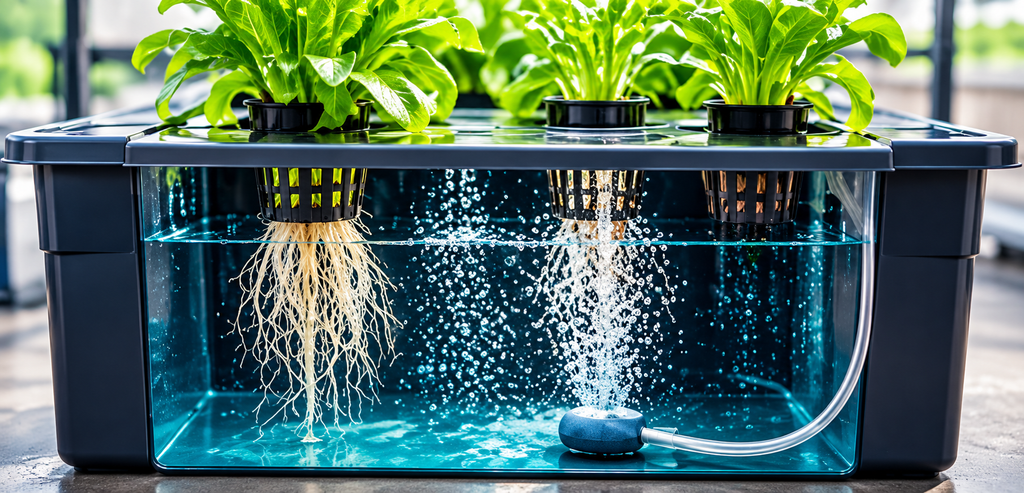
Deep Water Culture is one of the most accessible active hydroponic systems. Plants sit in net pots above a reservoir, and their roots extend into nutrient-rich water. An air pump and air stone usually add oxygen to the solution, helping roots function while submerged
How It Works
- Place seedlings in net pots with a suitable support medium.
- Set the pots in a lid or platform above the nutrient reservoir.
- Use an air pump and air stone to keep oxygen available to the roots.
- Monitor the water level, pH, nutrient strength, temperature, and root condition.
Advantages and Limitations
- Advantages: relatively simple construction, easy access to the reservoir, and good results with many leafy greens and herbs.
- Limitations: roots depend on adequate oxygen; warm water or failed aeration can cause problems. Larger plants may require more space and a larger reservoir.
Best Uses
DWC is commonly used for lettuce, basil, and other compact leafy crops. Larger fruiting plants can be grown in appropriately sized systems, but they need stronger support and careful water management.
| Beginner tip: Start with a small setup and a crop with modest nutrient demands. Check the system regularly and consider how you would respond if the air pump stopped working. |
2. Nutrient Film Technique (NFT)
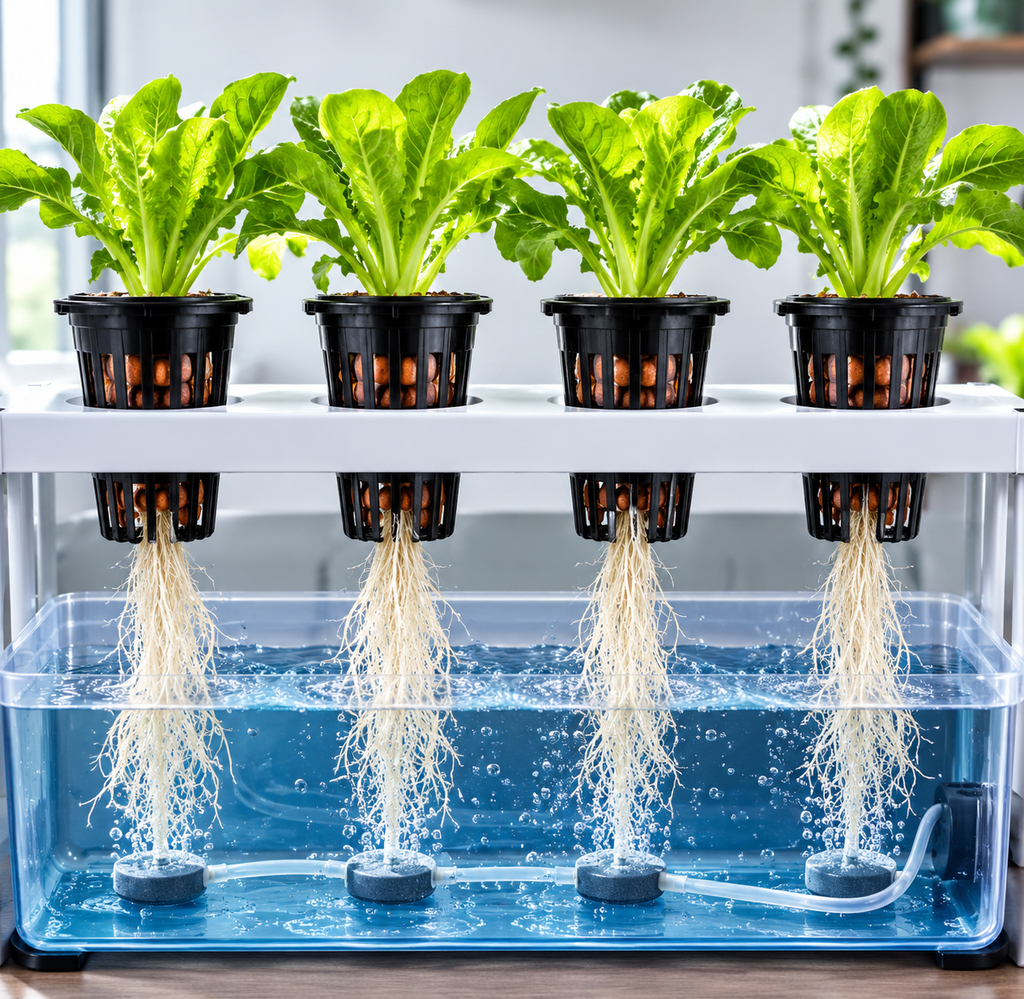
Nutrient Film Technique uses gently sloped channels through which a shallow stream of nutrient solution flows. Roots grow inside the channels and absorb water and nutrients while remaining partly exposed to air. The solution typically returns to a reservoir and is pumped through the system again.
Advantages and Limitations
- Advantages: efficient use of water in the channels, recirculation of nutrient solution, and an organized layout suitable for rows of plants.
- Limitations: roots may dry quickly if the pump stops; channels can become blocked by large root masses; flow must reach each plant evenly.
Best Crops
NFT is especially popular for lettuce, basil, pak choi, and similar leafy greens with relatively compact root systems. Large fruiting plants are often more difficult to manage in standard NFT channels.
Practical Setup Advice
- Check the channel slope and confirm that solution reaches all planting positions.
- Inspect channels and filters regularly for blockages.
- Consider a spare pump or an alert system if a failure could quickly damage the crop.
3. Ebb and Flow (Flood and Drain)
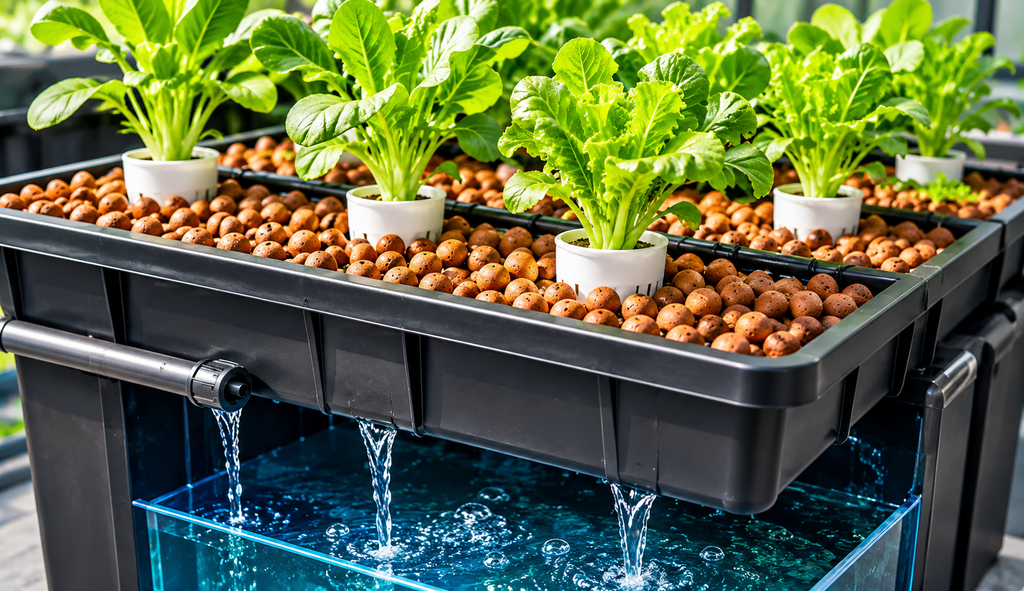
An ebb-and-flow system periodically floods a growing tray with nutrient solution and then drains it back into a reservoir. During flooding, roots receive water and nutrients; after drainage, air can refill spaces around the roots. Flood timing depends on the crop, growing medium, temperature, humidity, and system design.
Pros and Cons
- Pros: adaptable to trays, pots, and several growing media; suitable for a range of crops; can balance moisture and air around the roots.
- Cons: pumps, timers, and drains must work reliably. Poor drainage can leave roots too wet, while a pump failure can interrupt watering.
Where It Works Well
Ebb and flow can support herbs, leafy crops, and some larger plants when the tray, medium, and watering schedule are suitable. It is useful when several pots or blocks share a growing tray.
4. Drip Hydroponics
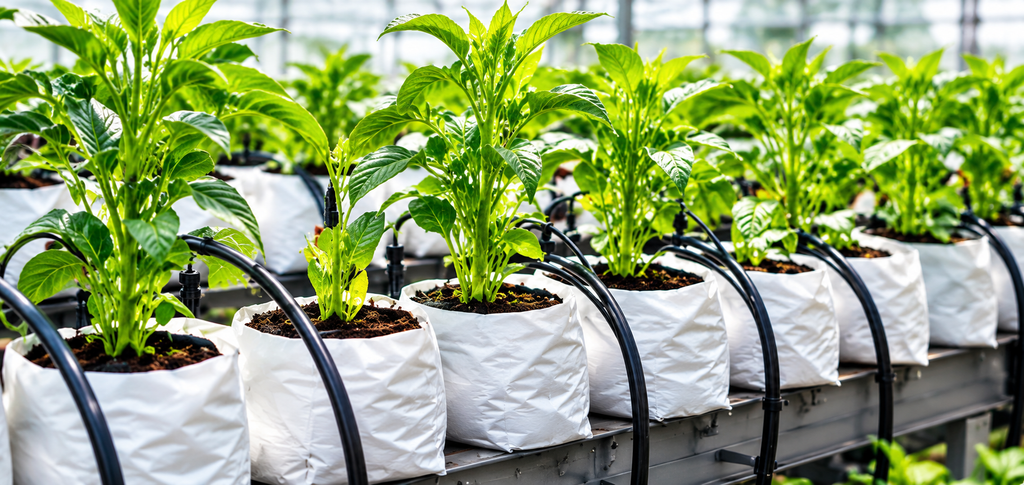
Drip hydroponics delivers nutrient solution to individual plants through small emitters connected to irrigation tubing. Plants often grow in a substrate such as coco coir, perlite, or rockwool. Depending on the design, excess solution may be collected and reused or allowed to drain away.
Why Growers Use Drip Systems
- Each plant or grow bag can receive a controlled amount of water and nutrients.
- The method is well suited to greenhouse crops with larger root systems, including tomatoes, cucumbers, and peppers.
- It can be scaled from a small grow tent to a commercial greenhouse.
- It works with several substrates and irrigation schedules.
Challenges to Plan For
- Emitters can clog, causing some plants to receive less solution than others.
- Filters, tubing, water pressure, and drainage need regular inspection.
- Substrate moisture must be managed to avoid both waterlogging and excessive drying.
Ebb and flow floods a shared tray at intervals, whereas drip systems deliver solution directly to individual plants. Drip is often a practical choice for larger crops that need carefully controlled irrigation.
5. Aeroponics
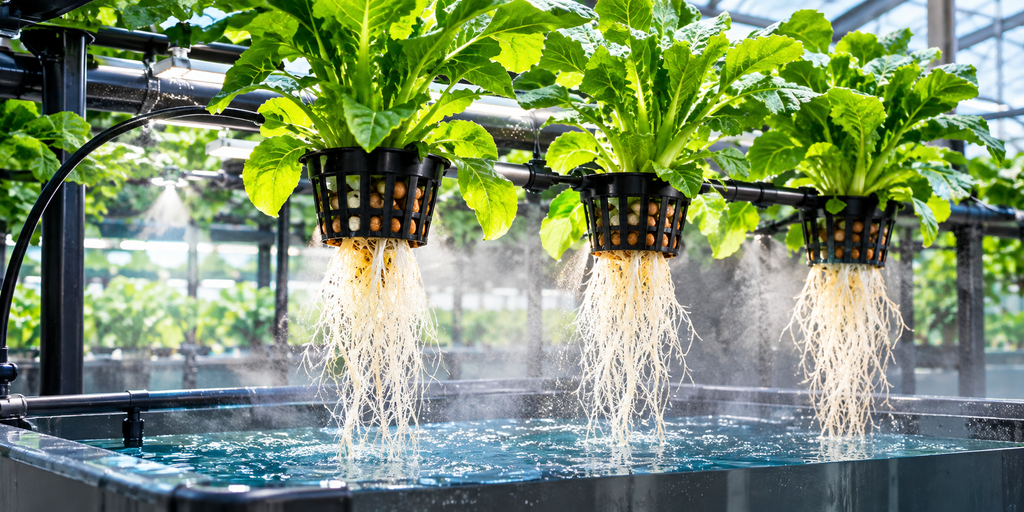
Aeroponics suspends plant roots in an enclosed chamber and delivers water and nutrients as a fine spray or mist. Between spray cycles, the roots remain exposed to air. When the system is correctly designed, this can provide good oxygen availability around the root zone.
Advantages
- Roots have substantial exposure to air.
- Water can be used efficiently in a well-designed system.
- Some designs make it easy to inspect roots and study plant development.
Challenges
- Nozzles can clog and require maintenance.
- Roots may dry quickly if misting stops.
- Pumps, filters, and controls add complexity and cost.
Aeroponics is generally better for growers who are comfortable maintaining irrigation equipment and monitoring the system closely. It can be rewarding, but it is rarely the lowest-maintenance choice for a first hydroponic garden.
6. The Kratky Method
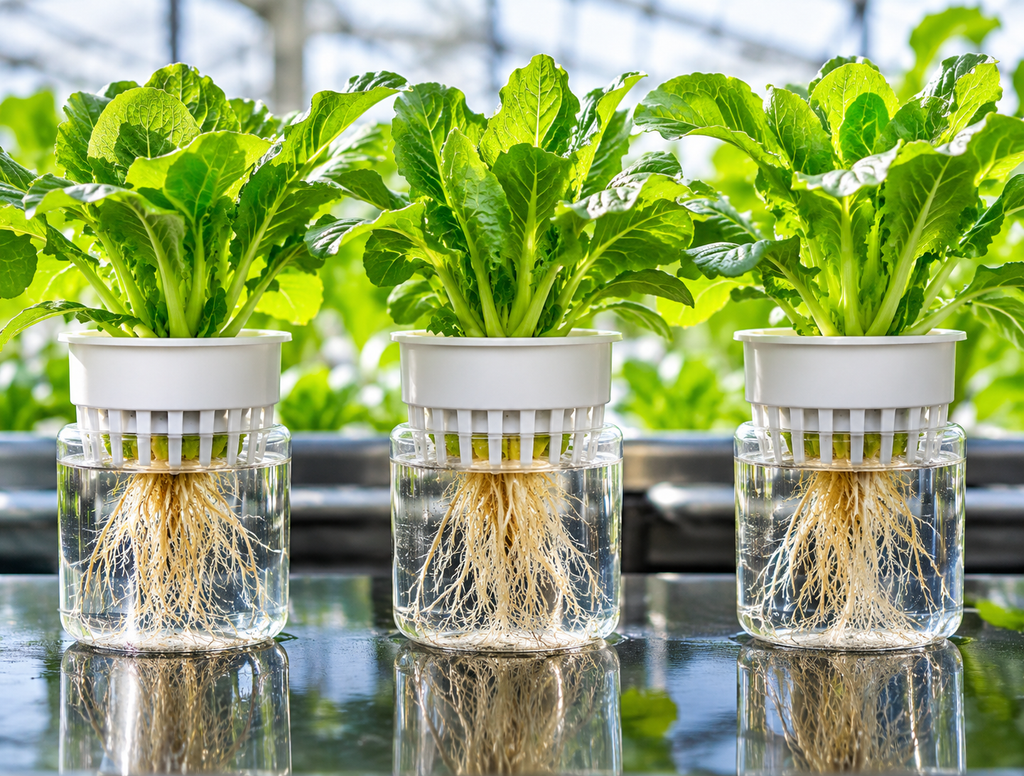
The Kratky method is a passive hydroponic technique that does not need a pump to circulate or aerate the nutrient solution. A plant sits above a reservoir. As the plant takes up water, the solution level drops and an air gap develops beneath the lid. Part of the root system can access this air while other roots reach the remaining solution.
Advantages
- Low equipment cost and no electricity required for water circulation.
- Simple to set up for small-scale growing and learning the basics.
- Useful for certain crops that can finish a growing cycle with a suitable reservoir.
Limitations
- The reservoir must be large enough for the crop and the planned growing period.
- It is less flexible for plants with high or changing water demands.
- A small container may run out of solution before harvest.
| Practical advice: Use an opaque, clean container to discourage algae and choose a crop suited to the reservoir volume. Not every plant can complete its life cycle in a small jar. |
7. Wick Systems

A wick system uses absorbent material to draw nutrient solution from a reservoir into the growing medium through capillary action. Because the solution moves passively, no water pump is required. The medium must retain enough moisture for the plant while preserving air spaces around the roots.
Advantages and Drawbacks
- Advantages: inexpensive, simple to assemble, and does not need a powered pump.
- Drawbacks: wicks may not deliver water quickly enough for large or fast-growing plants; the medium can become too wet or too dry; nutrient salts can accumulate over time.
Suitable Plants
Small herbs and ornamental plants are often more suitable than large fruiting vegetables. If the plant consumes water faster than the wick can supply it, a different system will be more dependable.
8. Vertical Hydroponics
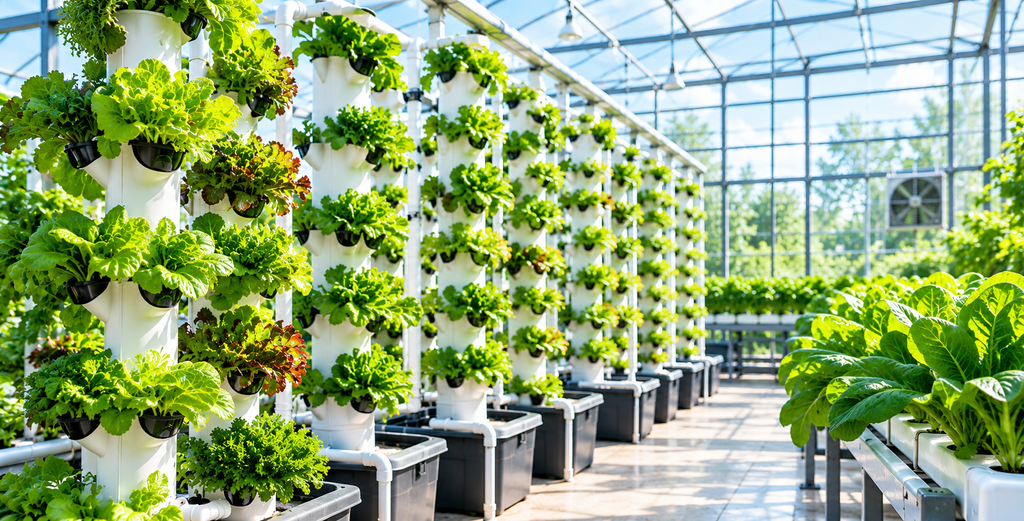
Vertical hydroponics arranges plants in stacked levels, towers, wall panels, or upright structures to make better use of floor space. It is a space-saving layout rather than a single irrigation method: vertical systems may use drip irrigation, NFT-style channels, or other techniques.
Advantages
- Can increase the number of planting positions in a limited footprint.
- Useful for balconies, indoor gardens, greenhouses, and urban growing projects.
- Can make harvesting and plant care more organized when access is planned well.
Challenges
- Upper and lower plants may receive different amounts of light or nutrient solution.
- The structure must safely support the weight of water, equipment, and mature plants.
Indoor installations may need supplemental lighting and ventilation.
Planning a Vertical System
Before building, check that every plant can be reached for harvesting and maintenance. Confirm that water reaches all levels evenly, that the reservoir is easy to clean, and that the structure is stable. Compact leafy greens and herbs are common choices because they fit well in tightly spaced layouts.
How to Choose the Right Hydroponic System
The best system is not necessarily the most advanced one. Start by identifying the crop, available space, budget, and amount of time you can spend on maintenance. Use this comparison as a general guide: actual costs and performance vary with size, materials, climate, and equipment quality.
| System | Typical cost | Complexity | Common use |
| DWC | Low–medium | Low–medium | Leafy greens, herbs |
| NFT | Medium | Medium | Lettuce, compact greens |
| Ebb and flow | Medium | Medium | Pots, trays, mixed crops |
| Drip | Medium–high | Medium | Tomatoes, cucumbers, peppers |
| Aeroponics | High | High | Specialized growing |
| Kratky | Very low | Low | Small batches of leafy crops |
| Wick | Very low | Low | Small plants, herbs |
| Vertical | Varies | Medium–high | Space-limited gardens |
A Quick Decision Guide
- For a low-cost first experiment, consider Kratky or a wick system and choose plants suited to passive growing.
- For a straightforward active setup, consider DWC if you can maintain aeration and monitor the reservoir.
- For multiple rows of leafy greens, consider NFT if you can keep pumps and channels reliable.
- For tomatoes and cucumbers, drip irrigation with a suitable substrate is often practical.
- For a small footprint, consider a vertical layout, but plan lighting, access, drainage, and structural support.
Questions to Ask Before You Buy
- Which crop will you grow, and how large will its roots and canopy become?
- How much space, light, electricity, and money do you have?
- Can you monitor pH, EC, water level, and equipment regularly?
- What will you do if a pump or power supply fails?
- Are you growing for personal use, learning, or commercial production?
| Keep it simple: A basic system that is well maintained often performs better than a complex system that is poorly monitored. |
Hydroponic Basics Every Grower Should Know
Monitor pH and Nutrient Strength
pH affects how readily plants can access nutrients, while electrical conductivity (EC) provides an indication of the solution’s overall concentration of dissolved salts. Use suitable meters or test kits and follow nutrient-product directions for your crop and growth stage. There is no single pH or EC target that is right for every plant.
Protect Root Health and Water Quality
Keep reservoirs, tools, and growing areas clean. Remove dead plant material and watch for clogged emitters, algae, unusual odors, slimy roots, or uneven growth. Clean equipment between crops and follow product labels when handling concentrated nutrients.
Do Not Forget Light and Airflow
Hydroponics does not remove the need for suitable light, temperature, humidity, and airflow. Indoor growers may need grow lights and ventilation. Outdoor and greenhouse growers should account for heat, sunlight warming the reservoir, and seasonal changes.
Frequently Asked Questions
Which hydroponic system is easiest for beginners?
Kratky is often one of the simplest ways to try hydroponics on a small scale. DWC is another accessible option if you can maintain aeration and check the reservoir.
Which system is best for tomatoes?
Drip irrigation with a suitable substrate is widely used for tomatoes because it allows controlled delivery to larger plants. The best design depends on the cultivar, climate, scale, and grower’s experience.
Does hydroponics use less water than soil gardening?
Recirculating systems can reduce water losses in some situations, but results depend on system design, crop, climate, drainage, and management. Plants still use water, and some is lost through evaporation and transpiration.
Can hydroponics work indoors?
Yes, provided light, airflow, temperature, and water quality are suitable. Supplemental lighting and ventilation may add to running costs.
Final Thoughts
Hydroponics offers a range of ways to grow plants without traditional soil, from simple passive containers to controlled recirculating systems. DWC and Kratky can be useful starting points for small leafy crops; NFT suits many compact greens; drip systems are practical for larger greenhouse crops; and vertical layouts help make use of limited space. Aeroponics can offer precise root-zone delivery, but it requires more attention to equipment.
Choose a system based on your crop, budget, space, and maintenance routine rather than technology alone. Learn to monitor water quality, keep equipment clean, and check plants consistently. A well-matched system will help you build confidence and improve your results one harvest at a time.