
Gardening has traditionally depended on soil, outdoor space, and favorable weather conditions. But what happens when you don’t have enough land, your soil quality is poor, or you want to grow plants indoors?
Hydroponics offers another approach.
By growing plants with nutrient-rich water instead of traditional soil, hydroponic systems can give growers greater control over the growing environment. From small home gardens to larger growing operations, hydroponics provides several interesting advantages.
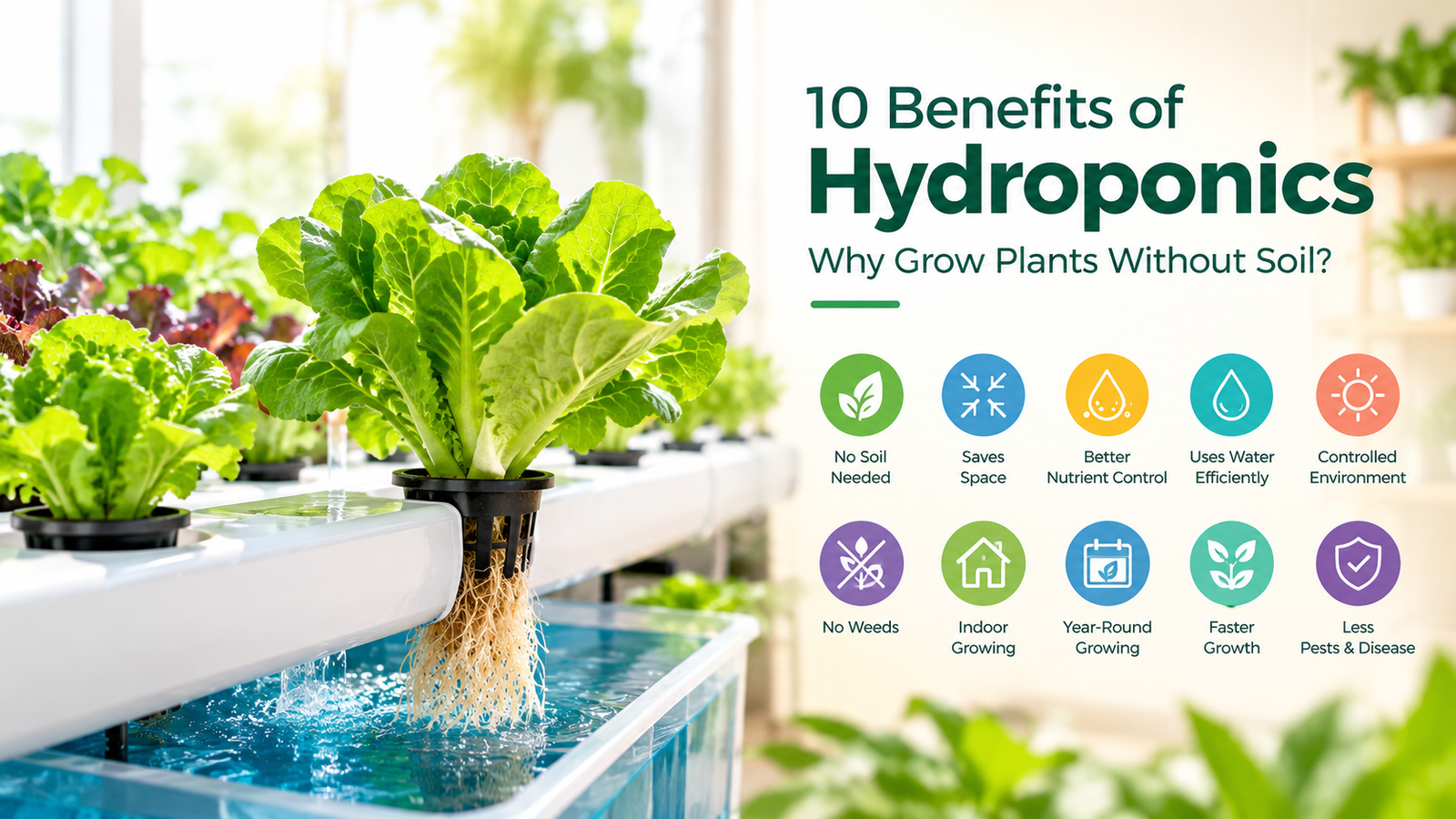
Here are 10 important benefits of hydroponics and why this growing method continues to attract gardeners around the world.
1. Hydroponics Does Not Require Traditional Soil
One of the biggest benefits of hydroponics is that plants can grow without traditional soil.
Instead of placing plants directly into garden soil, hydroponic systems provide nutrients through water.
The roots may be supported by materials such as:
- Expanded clay
- Perlite
- Rock wool
- Gravel
This allows plants to be grown in places where traditional soil gardening may not be practical.
Why Is This Important?
Poor soil quality can make traditional gardening difficult.
Hydroponics allows the growing environment to be created independently of the local soil.
2. Hydroponics Can Save Space
Traditional gardens often require significant land.
Hydroponic systems can be designed for much smaller areas.
Ideal for Urban Gardening
Hydroponics can be useful for people living in:
- Apartments
- Cities
- Small homes
- Buildings with limited outdoor space
Plants can also be arranged in compact or vertical systems.
This makes it possible to produce plants in spaces that would not normally be used for gardening.
3. Growers Have More Control Over Nutrients
In soil gardening, nutrient availability depends on many factors within the soil.
Hydroponics allows nutrients to be supplied through a managed nutrient solution.
Better Nutrient Management
The grower can monitor and adjust the nutrient environment according to the needs of the plants.
However, this also requires responsibility. Incorrect nutrient levels can create problems, so regular monitoring is important.
4. Hydroponics Can Use Water Efficiently
Water is an essential resource for all forms of agriculture.
Some hydroponic systems are designed to collect and reuse water that is not immediately absorbed by plants.
Recirculating Systems
In a recovery or recirculating system, unused nutrient solution can return to the reservoir and move through the system again.
This can reduce unnecessary water loss when the system is properly designed and maintained.
5. Plants Can Grow in Controlled Environments
Hydroponic gardens can be placed inside controlled environments.
Growers may be able to manage:
- Light
- Humidity
- Water
- Nutrients
- Temperature
Less Dependence on Outdoor Conditions
Traditional outdoor gardening is strongly affected by weather and seasonal changes.
Indoor hydroponic growing gives gardeners more control over the conditions surrounding their plants.
6. There Are No Traditional Garden Weeds
Weeds are a common challenge in soil gardening.
They compete with plants for resources and require time to remove.
Because hydroponics does not rely on traditional garden soil, growers generally avoid the same weed-management problems found in conventional gardens.
Less Time Spent on Garden Maintenance
This can reduce the need for tasks such as:
- Tilling
- Weeding
- Soil preparation
- Mulching
7. Hydroponics Can Be Suitable for Indoor Gardening
Indoor gardening is one of the most exciting possibilities offered by hydroponics.
With appropriate lighting, water, nutrients, and environmental conditions, plants can be grown inside homes and buildings.
Using Artificial Lighting
Grow lights can help provide plants with the light they need when natural sunlight is limited.
LED lighting is one option discussed for indoor growing because it can provide targeted light while supporting efficient energy use.
8. Plants Can Receive a Consistent Water Supply
Traditional soil can dry out or become oversaturated.
Hydroponic systems allow growers to manage water delivery more directly.
Depending on the system, water can be:
- Continuously circulated
- Delivered on a schedule
- Transported through wicks
- Supplied through drip lines
This helps create a more controlled root environment.
9. Hydroponics Can Reduce Some Soil-Related Problems
Traditional soil can contain weeds, pests, and organisms that affect plants.
Growing without soil can reduce exposure to some soil-related challenges.
However, hydroponic gardens are not completely free from problems.
Pests, diseases, algae, and equipment failures can still occur, which means monitoring and cleaning remain important.
10. Hydroponics Can Make Year-Round Growing Possible
Outdoor growing is often limited by climate and seasons.
A properly managed indoor hydroponic environment can allow plants to be grown outside their normal outdoor growing season.
Control Creates Flexibility
When growers can manage lighting and other environmental factors, they have more flexibility in planning their gardens.
This can be particularly useful for people who want to grow herbs and leafy vegetables throughout the year.
Are There Any Disadvantages to Hydroponics?
Hydroponics has many benefits, but it also has challenges.
Initial Equipment Costs
Depending on the system, you may need to purchase:
- Reservoirs
- Pumps
- Tubing
- Timers
- Lighting
- Nutrients
Technical Knowledge
Hydroponic growers need to understand how to manage water and nutrients.
Equipment Failure
Systems that depend on electricity can experience problems if pumps or other equipment stop working.
For these reasons, beginners should start with a manageable setup.
Frequently Asked Questions
Is hydroponics better than soil gardening?
Both methods have advantages. Hydroponics provides greater control over the growing environment, while soil gardening uses a natural soil ecosystem.
The best choice depends on your space, goals, and growing preferences.
Does hydroponics use less space?
Hydroponic systems can be designed for compact spaces and can make efficient use of vertical growing arrangements.
Is hydroponics expensive?
Simple systems can be relatively affordable, while larger or more advanced systems may require a greater initial investment.
Can hydroponic plants grow faster?
When water, nutrients, light, and environmental conditions are properly managed, hydroponics can support healthy and productive plant growth.
Final Thoughts
The benefits of hydroponics make it an attractive option for modern gardeners. It can provide efficient use of space, controlled nutrient delivery, indoor growing opportunities, and reduced dependence on traditional soil.
The best way to discover whether hydroponics is right for you is to start with a simple system and learn how plants respond to their environment.
Next to read: Discover the 6 main types of hydroponic systems or learn how to build your first DIY hydroponic garden.