
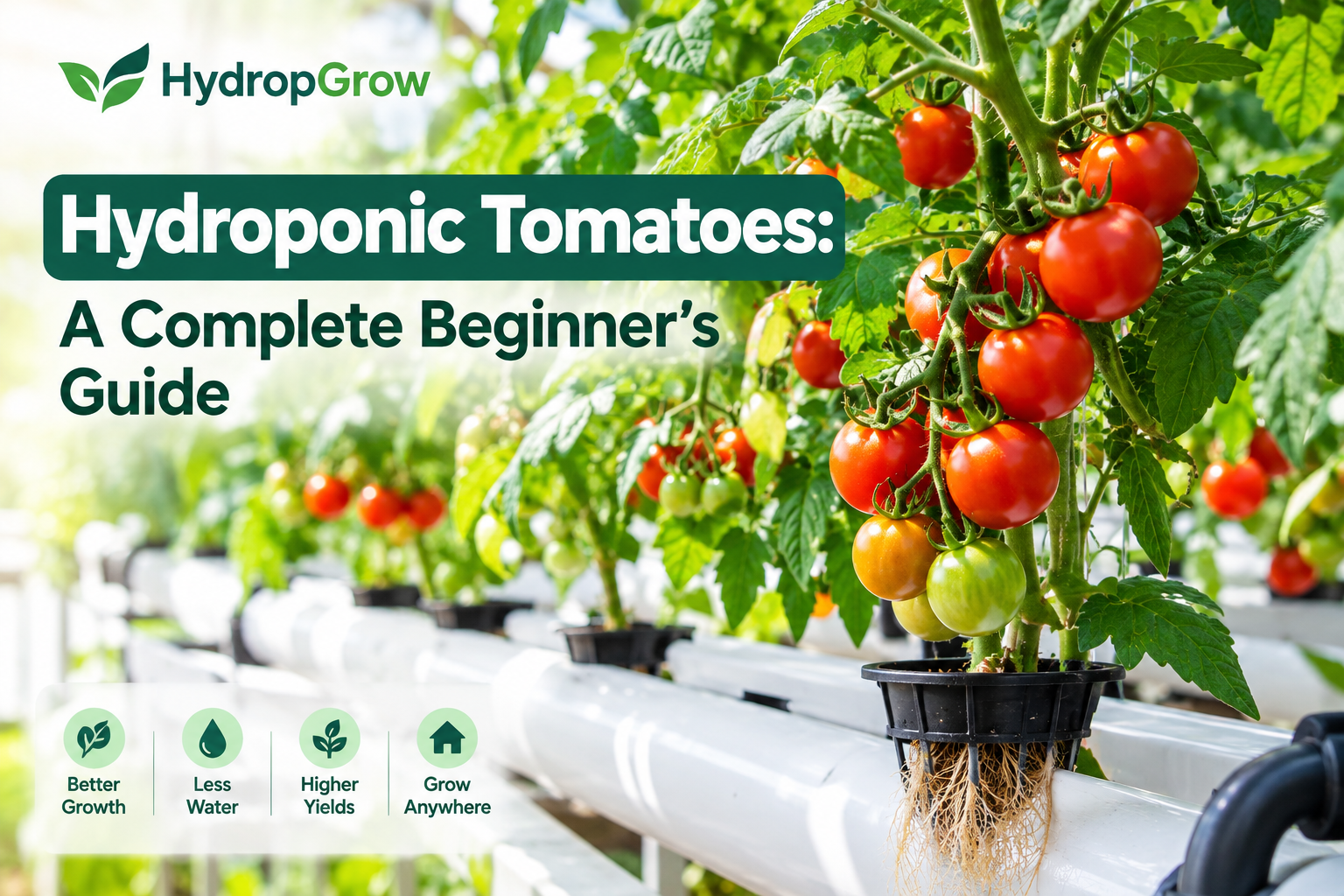
Tomatoes are among the most rewarding crops to grow hydroponically because a controlled root environment can support vigorous growth and productive fruiting. At the same time, tomatoes are more demanding than lettuce or herbs because mature plants become large and require strong support.
A successful hydroponic tomato garden needs sufficient light, balanced nutrition, good airflow, pollination, and a reliable irrigation system. The plant’s size should also be considered before choosing the growing area.
This guide provides a practical starting point for growing tomatoes without soil, whether you are experimenting with one plant or building a larger indoor system.
Choose a Suitable Tomato Variety
Compact determinate or dwarf varieties can be easier for small indoor spaces. Indeterminate varieties can continue growing and producing for a long time, but they require more vertical space and support.
When selecting seeds, check the mature plant size, fruit size, days to maturity, and suitability for protected or container growing. Starting with a variety suited to your available space can prevent many management problems later.
Healthy seedlings are important. Begin with clean seeds or healthy transplants and avoid introducing plants that show obvious pest or disease symptoms.
Select the Hydroponic System
Drip irrigation with an inert growing medium is a common approach for larger tomato plants because it provides support while allowing precise nutrient delivery. Deep water culture can also work, but the reservoir and aeration system must be large and reliable enough for mature plants.
The system should provide excellent drainage and oxygenation. Tomatoes consume significant amounts of water as they become large, so small reservoirs may require frequent attention.
Whatever system you choose, make sure you can access the roots, reservoir, pumps, and drainage components for maintenance.
Lighting Requirements
Tomatoes need substantial light to support strong vegetative growth and fruit production. Indoor growers should use a horticultural LED fixture designed for the size of the canopy.
Coverage is more important than simply choosing a high-wattage lamp. Large plants may need multiple fixtures or a larger fixture positioned to provide relatively even illumination.
Monitor leaf temperature and overall room temperature. More light can mean more heat, and heat management becomes increasingly important as the plants mature.
Nutrients and Water Management
Tomatoes require a complete nutrient program that supports both vegetative and reproductive growth. Follow a nutrient manufacturer’s crop-specific instructions and adjust gradually.
Monitor pH and EC rather than guessing nutrient strength. Water consumption can increase dramatically when the plants become large and begin producing fruit.
Keep the root zone well oxygenated and avoid long periods of stagnant or overheated solution. Stable conditions are generally easier for the plant to handle than repeated large changes.
Support, Pruning, and Training
Tomato plants can become heavy, especially when carrying multiple fruit clusters. Install support early rather than waiting until the plant becomes difficult to manage.
Indeterminate varieties often benefit from training onto string, trellis, or another vertical support. Pruning should be based on the variety and growing method rather than removing leaves indiscriminately.
Keep enough healthy foliage to support photosynthesis while maintaining airflow around the canopy. A crowded canopy can make it harder to inspect plants and manage humidity.
Pollination and Fruit Set
Indoor tomato plants may flower successfully but still need assistance with pollination. Gentle vibration of flower clusters can help release pollen. Good airflow can also support the process.
Temperature and humidity affect pollen performance and fruit set. If flowers repeatedly drop without developing fruit, review the environmental conditions as well as plant nutrition.
Once fruit begins developing, provide stable support and continue monitoring the root zone and canopy. Fruit production increases the plant’s demand for resources.
Common Problems
Yellowing leaves, curling foliage, blossom-end problems, and poor fruit set can have several causes. Avoid changing multiple variables at once because that makes diagnosis more difficult.
Check root health, pH, EC, light, temperature, airflow, and irrigation before making major corrections. Keep a simple log of changes and plant responses.
Pests can also become a problem indoors. Inspect the undersides of leaves regularly and isolate affected plants when practical.
Harvesting and Ongoing Care
Harvest tomatoes when they reach the desired stage of ripeness. Some growers harvest slightly earlier and allow fruit to finish ripening off the plant, while others prefer vine-ripened fruit.
Continue training the plant as it grows and remove dead or damaged foliage. Keep pathways and equipment clean to make the growing area easier to manage.
For long-term production, plan the next crop before the current plants reach the end of their productive period.
Frequently Asked Questions
Can tomatoes be grown hydroponically indoors? Yes, provided the space has sufficient light, airflow, support, and environmental control.
Do hydroponic tomatoes need soil? No. They can receive water and mineral nutrients through a hydroponic root environment.
Why are my tomato flowers not producing fruit? Poor pollination and unsuitable temperature or humidity can contribute, along with plant stress. Indoor growers may need to assist pollination.
Are tomatoes harder than lettuce hydroponically? They usually require more space, support, light, pruning, and environmental management, so they are a more involved crop for beginners.
Final Thoughts
Hydroponic tomatoes are a bigger project than leafy greens, but they demonstrate the full potential of controlled-environment growing. Choose the right variety for your space, provide strong and even lighting, manage nutrients carefully, support the plant early, and pay attention to pollination. A small number of well-managed plants can teach you a great deal about hydroponic fruit production.