
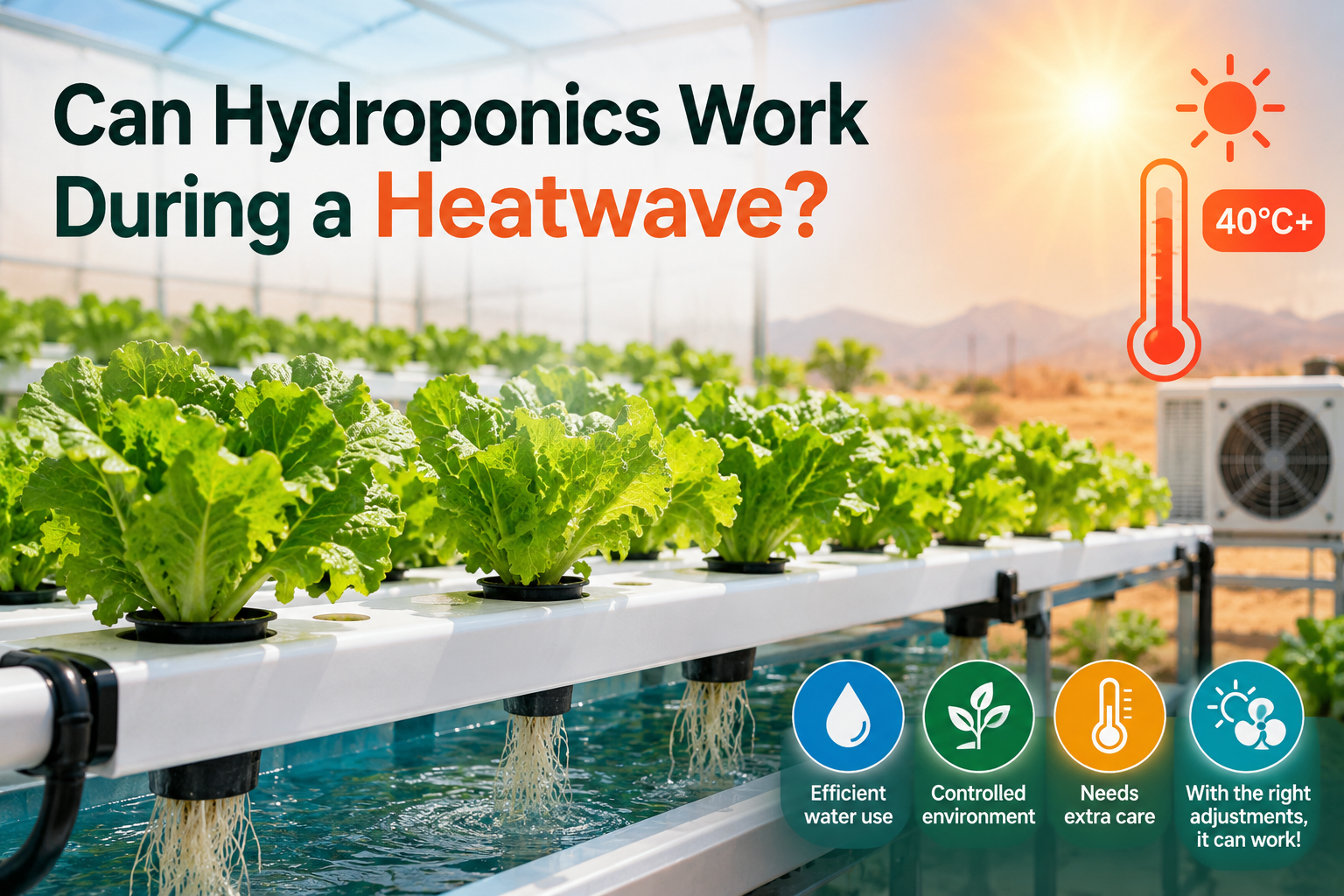
Hydroponic gardens can continue producing during hot weather, but a heatwave increases the importance of temperature, oxygen, water consumption, airflow, and light management. Warm water holds less dissolved oxygen than cooler water, while plants may also transpire faster as air temperature rises. Indoor gardens can become especially challenging if ventilation or air conditioning is limited. Heat management should therefore focus on the entire growing environment rather than one temperature number.
Table of Contents
- Why This Topic Matters
- What You Need Before You Start
- Understanding Hydroponic Systems
- Step-by-Step Guide
- Light, Water, Nutrients and Environment
- Common Mistakes to Avoid
- Troubleshooting
- Maintenance and Recovery
- Frequently Asked Questions
- Topic-Specific Questions
- Internal Linking Opportunities
- Final Tips
Why This Topic Matters
Heat affects several hydroponic variables at once. Plants may drink more water, reservoirs may warm, oxygen availability can decline, and humidity can change. A heatwave can also expose weak pumps, clogged tubing, or undersized ventilation systems.
What You Need Before You Start
- A reliable thermometer for air and reservoir temperature
- Strong but safe airflow
- A shaded or protected reservoir
- Adequate water supply
- pH and EC testing equipment
- Insulation or reflective protection where appropriate
- Backup power for critical equipment in vulnerable locations
Understanding Hydroponic Systems
DWC
Water temperature and aeration deserve close attention because the roots remain in the reservoir.
NFT
Warm nutrient solution and high plant demand can make continuous circulation especially important.
Media-based systems
The medium can provide some buffering, but irrigation demand may increase significantly during hot weather.
Passive systems
They can work, but water levels and moisture need closer monitoring as evaporation and plant demand rise.
The best setup is the one that matches the crop, available space, expected maintenance, and the grower’s ability to monitor the system. A simpler design is often easier to troubleshoot because fewer components can fail at the same time.
Step-by-Step Guide
1. Measure the actual environment
Do not guess. Check both air and nutrient-solution temperature.
2. Reduce direct heat load
Shade plants appropriately and keep reservoirs away from direct sun where possible.
3. Protect oxygen availability
Warm water holds less dissolved oxygen, so maintain appropriate aeration in systems that rely on it.
4. Monitor water consumption
Plants may use water faster during extreme heat. Record the change rather than automatically adding more nutrients.
5. Maintain airflow
Air movement helps manage heat and humidity around the foliage.
6. Avoid overcorrecting
Heat stress is not automatically a nutrient deficiency. Restore stable conditions first and then reassess.
Light, Water, Nutrients and Environment
The reservoir is often a critical heat-control point. A dark container sitting in direct sun can warm quickly. Once solution temperature rises, dissolved oxygen capacity falls. Meanwhile, the leaves may continue losing water through transpiration. These effects make hot-weather monitoring more important than following a fixed routine without checking actual conditions.
Light
Light should be managed according to the crop and the growing location. Indoor growers should distinguish between a room that looks bright and a location that provides enough usable light for photosynthesis. Outdoor or window gardens also need protection from excessive heat.
Water and Oxygen
Water availability and root-zone oxygen are connected to system design. Active circulation, aeration, reservoir temperature, and the amount of exposed root surface all influence the root environment. Do not treat water quantity alone as proof that roots are healthy.
Nutrients and pH
Use a complete hydroponic nutrient program appropriate for the crop. Measure the solution rather than making repeated adjustments based only on appearance. pH and EC are useful management tools, but they should be interpreted together with plant growth and water conditions.
Common Mistakes to Avoid
- Ignoring reservoir temperature
- Adding concentrated nutrients because plants look stressed
- Keeping the reservoir in direct sunlight
- Reducing airflow during a hot period
- Letting water levels fall without monitoring plant demand
Troubleshooting
Leaves wilt during the hottest part of the day
Check root-zone temperature, water level, airflow, and light exposure before assuming a nutrient problem.
Roots look stressed
Review water temperature and aeration, especially in DWC.
EC rises quickly
Plants may be taking up water faster than nutrients. Confirm with measurements and restore the solution carefully.
Humidity becomes excessive
Increase appropriate airflow and ventilation while avoiding direct drying winds on sensitive foliage.
Maintenance and Recovery
During heatwaves, harvest mature leafy greens promptly if they are approaching their preferred harvest stage. Fruiting crops may continue producing, but stress can reduce growth or fruit quality. Focus on stability rather than forcing growth. A good maintenance routine is preventive. Check the root zone, reservoir level, equipment, plant structure, and growing environment at regular intervals. Record unusual observations so you can identify patterns instead of treating every problem as a new mystery.
Frequently Asked Questions
Can hydroponic plants survive extreme heat?
They can tolerate hot periods if the root zone and overall environment remain within a range suitable for the crop, but prolonged heat increases stress.
Why is hot hydroponic water a problem?
Warm water can hold less dissolved oxygen, which matters for roots in systems where oxygen is supplied through the nutrient solution.
Should I add ice to the reservoir?
Sudden temperature changes are not a reliable general solution. A more stable approach is to reduce heat entering the reservoir and manage the growing environment.
Do plants need more water during a heatwave?
Often water use increases because transpiration can increase, but the correct response is to monitor actual water level and plant condition.
Topic-Specific Questions
Cool-season leafy greens can be more challenging during extreme heat, while warm-season crops such as tomatoes, peppers, and cucumbers may tolerate higher temperatures but still suffer when root-zone conditions become excessive. Crop-specific limits should guide management.
When applying this advice to a specific crop, consider plant age, canopy size, root volume, and the crop’s preferred environmental conditions. A young herb and a mature fruiting plant can respond very differently to the same change in water, temperature, or light.
Practical Takeaway
The most reliable hydroponic routine is based on observation and measurement. Keep the system stable, learn what is normal for your crop, and investigate changes before making large corrections. This approach makes hydroponics more predictable and easier to maintain over time.
Internal Linking Opportunities
- What Happens If You Forget to Check Your Hydroponic Garden for a Week?
- Can Hydroponic Plants Survive With Natural Light Only?
- Can Tap Water Damage a Hydroponic Garden?
Final Tips
- Match the hydroponic method to the crop and the level of maintenance you can provide.
- Measure important variables instead of relying only on visual symptoms.
- Keep equipment clean and inspect pumps, tubing, reservoirs, and timers regularly.
- Make one controlled change at a time when troubleshooting.
- Record useful observations so future problems are easier to diagnose.
[…] Can Hydroponics Work During a Heatwave? […]
please check this link for more infos