
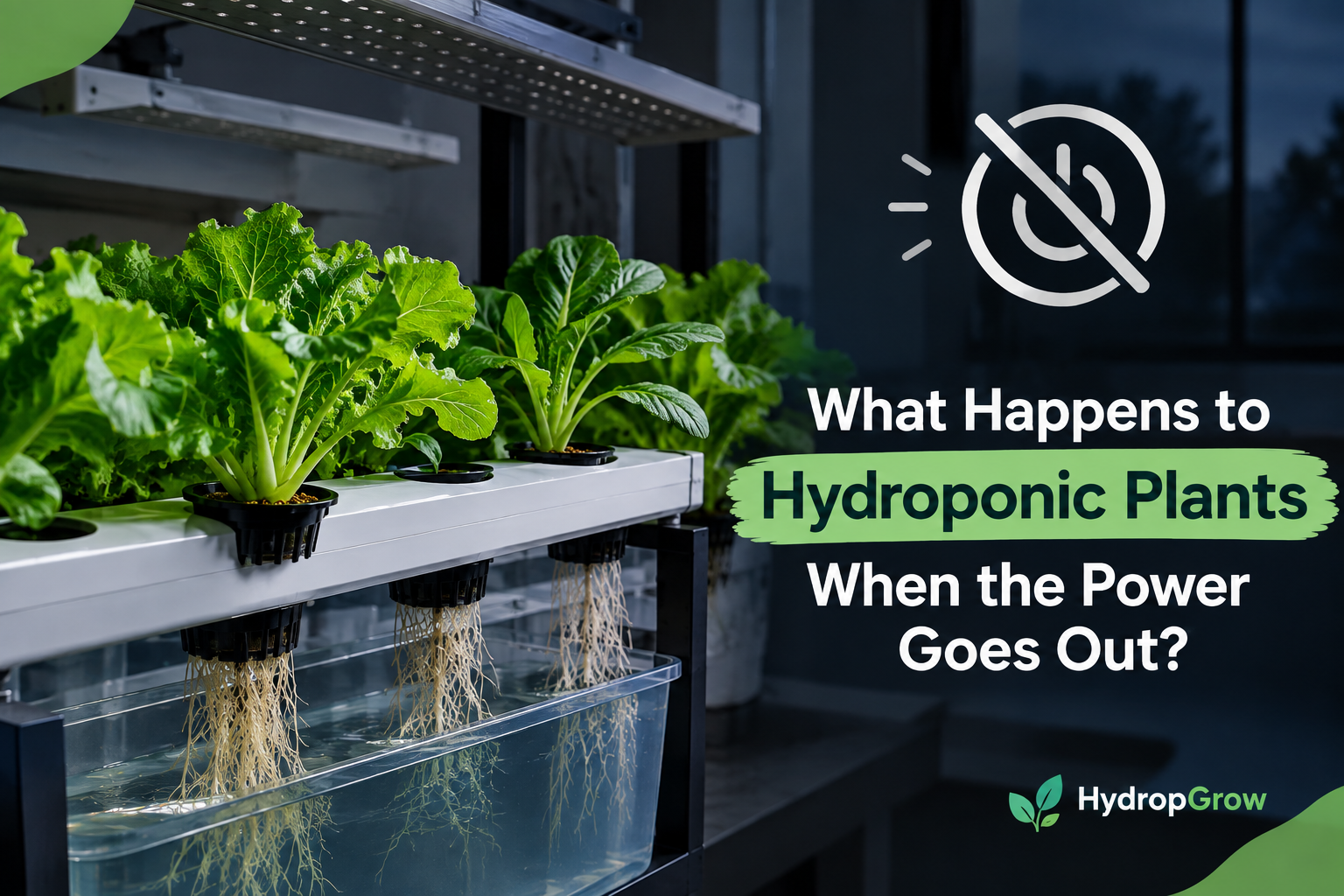
A power outage can become a serious problem for an active hydroponic garden because pumps, air pumps, timers, fans, and grow lights may depend on electricity. The risk is not identical for every system. A passive wick garden can continue operating without power, while NFT and many ebb-and-flow systems can quickly lose circulation when a pump stops. Deep water culture may continue to hold water around the roots, but oxygen can become limited if aeration stops. The right response therefore depends on the hydroponic system, crop, temperature, reservoir size, and length of the outage.
Table of Contents
- Why This Topic Matters
- What You Need Before You Start
- Understanding Hydroponic Systems
- Step-by-Step Guide
- Light, Water, Nutrients and Environment
- Common Mistakes to Avoid
- Troubleshooting
- Maintenance and Recovery
- Frequently Asked Questions
- Topic-Specific Questions
- Internal Linking Opportunities
- Final Tips
Why This Topic Matters
Hydroponic plants rely on a controlled root environment. Electricity may be supporting water movement, oxygenation, climate control, and artificial lighting at the same time. When that support disappears, the most immediate concern is usually not the absence of electricity itself but the change it causes in water availability, dissolved oxygen, temperature, and light. Understanding those links makes it easier to respond calmly instead of making several changes at once.
What You Need Before You Start
- A backup battery or UPS where appropriate
- A clean container for emergency watering or circulation
- A battery-powered air pump for systems that depend on aeration
- A thermometer for the growing area and reservoir
- A flashlight or backup light for safe inspection
- Clean tubing and spare fittings for quick repairs
- A simple written emergency procedure for the garden
Understanding Hydroponic Systems
Passive or wick systems
These systems may continue to provide moisture without a pump. The main question is whether the growing medium remains appropriately moist and whether the plant is receiving enough light and nutrients.
Deep Water Culture
The roots remain in nutrient solution, but oxygen becomes an important concern when an air pump stops. The larger and warmer the reservoir, the more carefully the grower should monitor conditions.
NFT systems
NFT depends on a thin, moving film of nutrient solution. When the circulation pump stops, roots can lose access to flowing solution relatively quickly, making this one of the systems where a backup plan is particularly useful.
Ebb and flow
The pump normally moves solution into and out of the growing area on a schedule. During an outage, the timing of the last flood and the moisture-holding capacity of the medium affect how quickly plants become stressed.
The best setup is the one that matches the crop, available space, expected maintenance, and the grower’s ability to monitor the system. A simpler design is often easier to troubleshoot because fewer components can fail at the same time.
Step-by-Step Guide
1. Check the system safely
Confirm that the outage is real and inspect the garden without touching wet electrical equipment. Disconnect damaged equipment and keep water away from plugs, power strips, and extension connections.
2. Identify the critical failure
Determine whether the outage has stopped a water pump, air pump, grow light, fan, heater, or several devices. The priority is different for each system.
3. Protect the root zone
In pump-dependent systems, check whether roots are still wet. If necessary, use a clean manual method to provide solution temporarily, following the nutrient concentration already used in the garden.
4. Restore oxygen where needed
For DWC and similar systems, maintaining aeration can be especially valuable. A battery-powered air pump can serve as an emergency backup.
5. Control heat and light
If the outage also stops ventilation or air conditioning, monitor temperature. Avoid adding intense light or heat to a space that is already becoming warm.
6. Restart gradually
When electricity returns, inspect pumps and electrical connections before switching everything back on. Confirm normal circulation, aeration, lighting, and temperature rather than assuming every device restarted correctly.
Light, Water, Nutrients and Environment
A power outage can affect several environmental variables at once. A stopped fan can increase humidity and temperature. A stopped pump can reduce water movement. A stopped air pump can reduce oxygenation. A stopped grow light reduces the daily light available to indoor crops. Because these factors interact, the best response is usually to restore the most essential function first rather than changing nutrient concentration or adding fertilizer as a reaction to temporary stress.
Light
Light should be managed according to the crop and the growing location. Indoor growers should distinguish between a room that looks bright and a location that provides enough usable light for photosynthesis. Outdoor or window gardens also need protection from excessive heat.
Water and Oxygen
Water availability and root-zone oxygen are connected to system design. Active circulation, aeration, reservoir temperature, and the amount of exposed root surface all influence the root environment. Do not treat water quantity alone as proof that roots are healthy.
Nutrients and pH
Use a complete hydroponic nutrient program appropriate for the crop. Measure the solution rather than making repeated adjustments based only on appearance. pH and EC are useful management tools, but they should be interpreted together with plant growth and water conditions.
Common Mistakes to Avoid
- Ignoring a stopped pump because the plants still look normal
- Using electrical equipment near standing water
- Adding extra nutrients to compensate for outage stress
- Overwatering plants that already have saturated roots
- Leaving a warm, closed growing room without ventilation
- Restarting damaged equipment without checking connections
Troubleshooting
Leaves wilting
Check whether the root zone still has access to water. In NFT or other pump-dependent systems, a circulation failure can explain rapid symptoms.
Roots look unhealthy
Consider oxygen availability, water temperature, and prolonged stagnation. Do not respond by blindly increasing nutrients.
Growing area becomes very hot
Ventilation and climate control may have stopped. Reduce heat sources and improve safe airflow where possible.
Plants appear stretched after the outage
A longer interruption to grow lighting can alter the normal light schedule. Resume a consistent schedule rather than trying to compensate with extreme lighting.
Maintenance and Recovery
After power is restored, give plants time to return to normal conditions. Check the reservoir, pumps, air stones, tubing, light timer, and fans. Remove damaged leaves only when there is a clear reason. Continue normal monitoring rather than making several large corrections at once.
A good maintenance routine is preventive. Check the root zone, reservoir level, equipment, plant structure, and growing environment at regular intervals. Record unusual observations so you can identify patterns instead of treating every problem as a new mystery.
Frequently Asked Questions
Can hydroponic plants survive a short power outage?
Many can, but tolerance depends on the system, crop, temperature, root exposure, and duration. A short outage is generally less concerning than a prolonged interruption in a warm environment.
Which hydroponic systems are most dependent on electricity?
Systems that actively circulate or aerate nutrient solution, such as NFT, ebb and flow, and many DWC setups, have important electrical components.
Should I add nutrients after a power outage?
Not automatically. First restore normal water movement, oxygen, temperature, and lighting. Test the solution before making nutrient changes.
Is a battery backup useful for hydroponics?
It can be useful for critical equipment such as an air pump or small circulation pump, provided the backup is correctly sized and used safely.
Topic-Specific Questions
Fruiting crops and large plants can be especially demanding because they often have larger root and canopy systems and may be more sensitive to extended interruptions. Leafy greens can also suffer when a pump-dependent system dries out, even if their short-term water requirements are lower.
When applying this advice to a specific crop, consider plant age, canopy size, root volume, and the crop’s preferred environmental conditions. A young herb and a mature fruiting plant can respond very differently to the same change in water, temperature, or light.
Practical Takeaway
The most reliable hydroponic routine is based on observation and measurement. Keep the system stable, learn what is normal for your crop, and investigate changes before making large corrections. This approach makes hydroponics more predictable and easier to maintain over time.
Internal Linking Opportunities
- How Long Can Hydroponic Plants Survive Without Electricity?
- Can You Run a Hydroponic Garden Without a Water Pump?
- Can Hydroponics Work During a Heatwave?
Final Tips
- Match the hydroponic method to the crop and the level of maintenance you can provide.
- Measure important variables instead of relying only on visual symptoms.
- Keep equipment clean and inspect pumps, tubing, reservoirs, and timers regularly.
- Make one controlled change at a time when troubleshooting.
- Record useful observations so future problems are easier to diagnose.
[…] What Happens to Hydroponic Plants When the Power Goes Out? […]